 ETOS Global

Quick Answer:
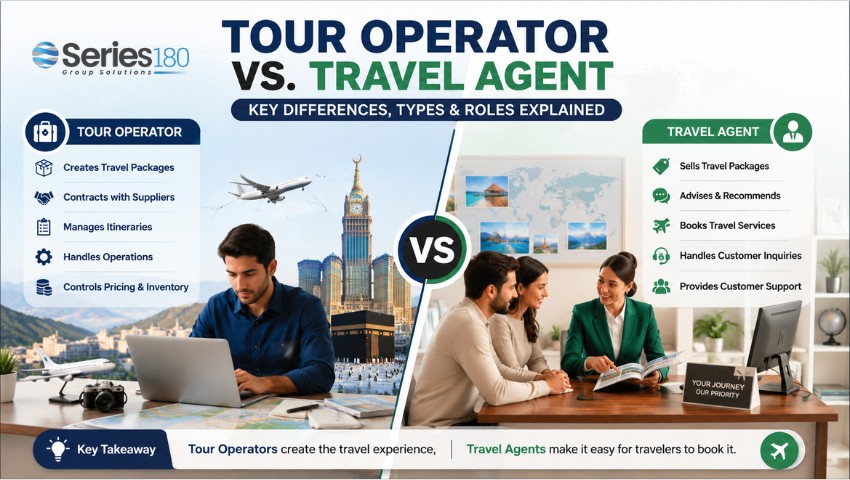
The main difference between a tour operator and a travel agent is that a tour operator creates and arranges travel packages and a travel agent markets and sells the packages and helps customers to make bookings. In simple terms, tour operators make the travel product and travel agents sell it. Understanding the difference, Tour operators and travel agents are not the same, and travel businesses that want to improve operations, increase bookings and provide better customer experiences.
Introduction
If you work in the travel industry, you have likely heard the terms “tour operator” and “travel agent” used interchangeably. But they serve very different roles in the travel booking process.
Whether you sell travel packages, group tours, holiday packages or custom travel experiences, having an understanding of the tour operator vs travel agent relationship can help you streamline operations and grow your business. In this guide, we will explain to you their roles, responsibilities, and how they work together to best serve travelers.
What is a Tour Operator? & What Does They Do?
A tour operator is a travel company or individual that creates, manages travel packages and organizes holidays or vacations.
The tour operator includes planning itineraries, negotiating with travel suppliers, arranging accommodations, transportation, sightseeing activities, and creating complete travel packages.
Key Responsibilities of a Tour Operator
- Create travel packages and itineraries
- Contract with hotels, airlines, and local suppliers
- Manage pricing and inventory
- Handle operational logistics
- Ensure quality travel experiences
- Manage group departures and fixed departures
In short, a tour operator is responsible for building the travel product before it reaches the customer.
What Is a Travel Agent?
A travel agent acts as an intermediary between travelers and travel suppliers. Instead of creating travel packages, travel agents help customers choose, compare, and book travel services.
Key Responsibilities of a Travel Agent:
- Sell travel packages and services
- Provide travel advice and recommendations
- Manage customer inquiries
- Assist with bookings and cancellations
- Offer customer support before and during travel
Travel agents focus on customer relationships and sales, making travel planning easier for travelers.
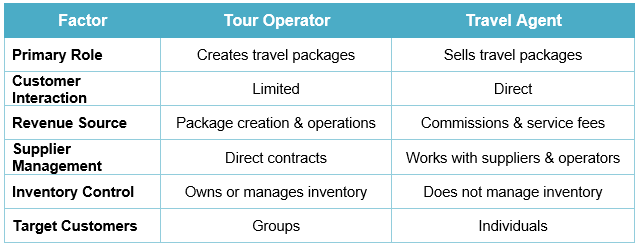
Tour Operator vs Travel Agent: Key Differences
Types of Tour Operators
Different travel businesses operate as different types of tour operators:
- Inbound Tour Operators
- Outbound Tour Operators
- Domestic Tour Operators
- Destination Management Companies (DMCs)
- Religious Travel Operators (like Umrah & Hajj Specialists)
Each type serves a unique market and requires efficient booking, inventory, and customer management systems.
Why Does Understanding This Difference Matters?
Many growing businesses eventually move from spreadsheets to dedicated systems, comparing travel software instead of spreadsheets to improve operational efficiency. Knowing where you fit in the business helps you choose the right technology & processes.
For example, tour operators will often deal with fixed departures, hotel allotments, visa processing and group arrangements. These tasks require systems that help businesses manage group travel operations efficiently as they scale.
Simplify Your Travel Operations with Series180
If you are a tour operator or travel business, Series180 helps you manage bookings, itineraries, suppliers, customers, payments, and departures from a single platform.
With automation, centralized management, and real-time visibility.
Series180 helps travel businesses:
- Reduce Manual Work
- Improve Customer Experiences
- Scale Operations Efficiently
Whether you are managing group travel packages or customized travel services, Series180 gives you the tools needed to run your business with confidence.
Conclusion
Knowing the difference between a tour operator and a travel agent is essential for both travel companies and travelers. Tour operators create travel experiences, while travel agents help customers book them. Both play an important role in the travel ecosystem and often work together to provide seamless journeys.
With travel companies increasingly moving to digital operations, the right technology platform can make managing bookings, suppliers, and customers that much easier.
Ready to streamline your travel operations? Book a meeting with Series180.
Frequently Asked Questions (FAQs)
1. Can a company be both a tour operator and a travel agent?
Yes. Many travel companies create their own travel packages while also selling third-party travel products, allowing them to operate in both roles.
2. Which earns more: a tour operator or a travel agent?
It depends on business size and market reach. Tour operators generally have higher revenue potential because they control package pricing and margins.
3. Do travel agents need contracts with hotels and airlines?
Not always. Many travel agents access inventory through tour operators, consolidators, or global distribution systems rather than direct supplier contracts.
4. Is technology important for tour operators?
Yes. Modern tour operators rely on booking software, CRM systems, supplier management tools, and automation platforms to manage operations efficiently.
5. How do tour operators manage large group departures?
Most successful operators use specialized travel management software to handle reservations, room allocations, visas, payments, itineraries, and customer communication from a centralized system.






Leave a comment